Background Ideas to Make Your Video Podcast Stand Out
Contents
At a Glance
Your podcast background is everything the viewer sees on screen: the wall, the furniture, the lighting, and the props. It also shapes how your audience perceives you before you say a word.
A well-composed backdrop reinforces your brand, suits your niche, and stays consistent enough to repurpose content across platforms.
Good lighting, clean framing, and physical depth matter as much as the decor itself.
You don't need a big budget to make it work.
You’re setting up your video podcast, but something feels… off. Audio? Perfectly dialed. Content? Absolute gold. But the aesthetic… Not quite there eh?
It’s fairly common for podcasters to pay less attention to how the podcast looks on screen. Maybe they trust their content enough to do the heavy lifting and keep viewers engaged, or maybe they just haven't thought about it.
Regardless, we’re talking about viewers here, not listeners. Consider that 33% of podcast listeners prefer to actively watch the video while tuning into their favorite shows.
No matter how great your concept is, the aesthetics are worth going the extra mile on. Production quality across video podcasts is through the roof nowadays, and standing out means meeting the standards audiences have come to expect.
Don’t sweat it though, you don’t need to hire a prop-stylist. A little goes a long way. In this guide, we’ll explain why your background matters, what’s going to make it great, and we’ll bounce off some visual ideas that you can experiment with.
Why the Background Matters
Your visual setup sets the tone before you even say a word. Is it clean and professional? Artsy and quirky? Or does it look like you’re about to hack into classified government servers right after you’re done recording?
A great background hints at your artistic expression, reinforces your brand, and fades into the background cleanly so your viewers can focus on you. That might sound counterintuitive, but we firmly believe that good design is invisible, until it’s bad.
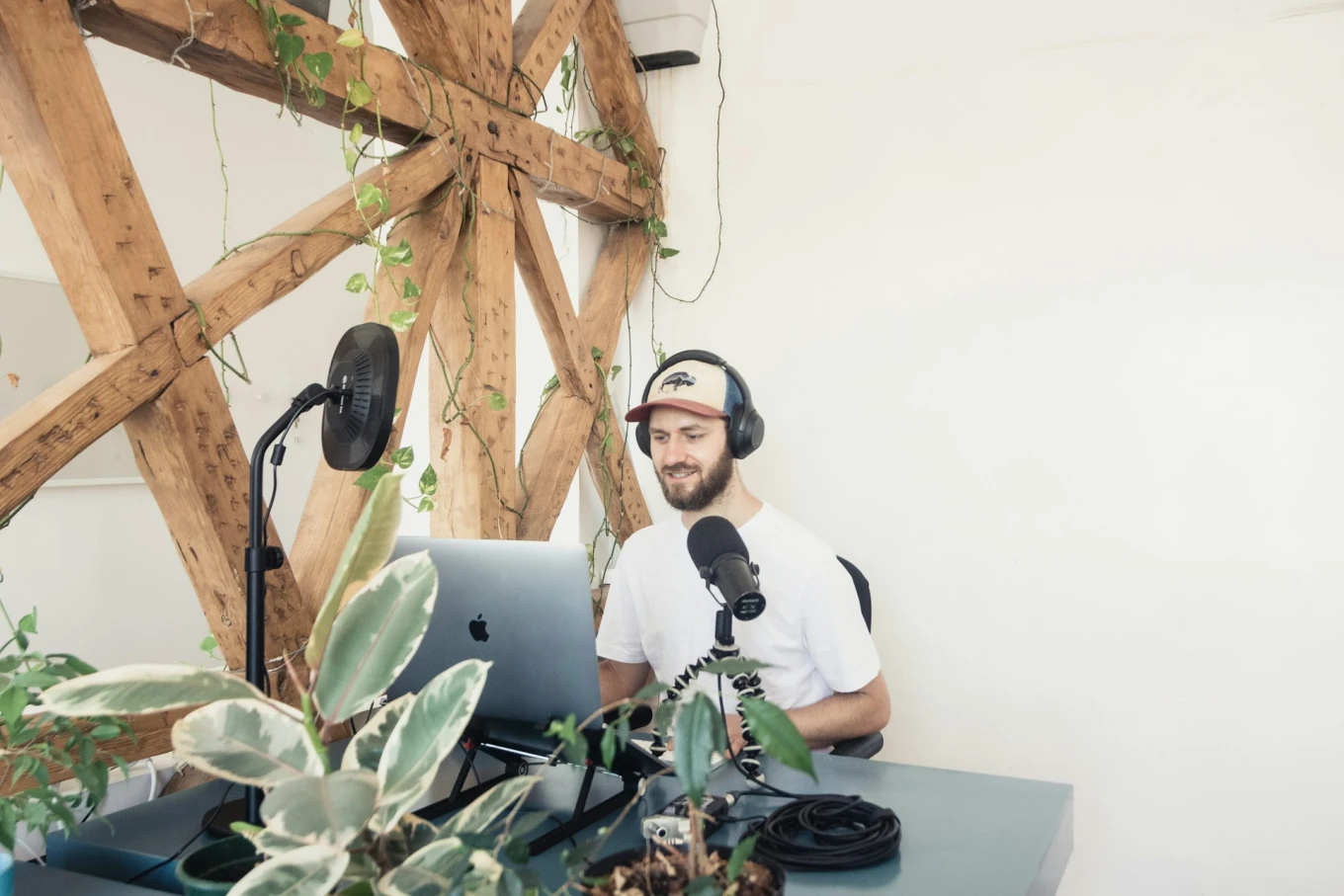
It also helps to reinforce the message or values you’re trying to convey. Say you’re podcasting for environmental activism or sustainability; a background of books on relevant topics (that you’ve read) and interesting plants can set the right tone.
If you’re a tech company, the background might want to lean more toward minimalism, with some of your favorite equipment visible.
The stakes are higher if your niche entails visual improvement of some sort… Interior design, for instance. In that case, your background can’t have a rug that’s too small for your space, with builder-grade, bright white overhead lights flooding the room.
Your audience won’t take you seriously if you don’t lead by example.
There's also a practical upside worth thinking about. A consistent, well-composed background makes it much easier to repurpose your content down the line.
When your setup looks the same episode to episode, you can pull clips for Reels, Shorts, or TikTok without worrying about visual inconsistency between posts.
Composing the Perfect Background
Before we get into background ideas, there are some best practices you should know about. These foundational rules apply across the board, regardless of which style you go with.
A great background comes down to deliberate choices: what goes in the frame, how it's lit, and how everything sits together on camera. Get those three things right and the rest follows naturally.
The tips below cover the fundamentals, and they apply whether you're recording in a purpose-built studio or a spare bedroom with a ring light.
Subtract Before You Add
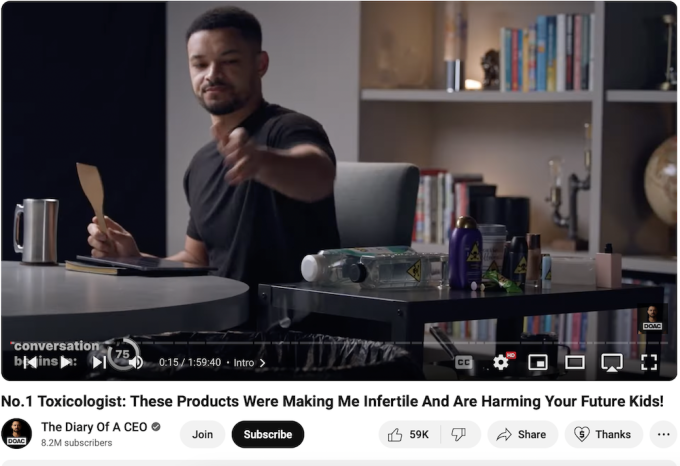
Rule number 1: Less is more. Avoid clutter: visually busy patterns in large format, a gallery wall full of mass-produced art prints that don’t say anything, overcrowded shelves, or anything that screams “I didn’t think this through.”
The Starbucks cup on the set of Game of Thrones may have not hurt the show’s fame, but if your niche is self improvement, maybe leave your glass bong out of the frame. If you have a shelf behind you, apply the rule of thirds by placing items of varying height in clusters of 3.
Allow room for negative space. Remove items until you get to a point where if you take away just one more element, it’s going to start looking sparse. Maximalists won’t love this idea, but honestly, we’re going for something safe and easy to implement.
Having said that, a plain wall styled with tasteful decor and a pop of color can work wonders if done right, as long as you’re using colors thoughtfully. Reading up on color theory and creating a mood-board will help tremendously.
Experiment with contrasting textures like fabric coasters on glass tabletops, leather cushion covers on a boucle couch, or something similar.
Details matter; if you have a couch visible in the background, put a nice throw blanket on it. Place a tall plant, allow the green to juxtapose itself against a white wall. Hang framed art that means something to you, and use mood lighting to complete the composition.
Cable management is a big one. With so much equipment in use, you’re going to end up with a fustercluck of cables. Buy cable tracks, organizers, zip ties, and whatever else you can to keep them hidden as much as humanly possible.
Leverage Your Brand Identity and Merchandise
Your video podcast background should be on brand, whether that’s a personal brand or a business that you own / are a part of.
Now, you know your brand better than any of us writing this blog, so we can’t give you the exact background as is (though we can give you some tips about improving your video podcasting setup if you’d like.)
But do your best to follow your brand guidelines. Now, that being said, a green screen of just a plain color and your brand logo is also just a tad drab… It’s going to feel like a dry webinar. Podcasting is all about humanizing your brand. So make it something real.
Match your cables with your brand colors, take cues from visual merchandising, place a backlit logo front and center, and wear your own merch. Bonus points if you get a backlit logo, especially if it’s a traditional glass neon sign. Whatever you do, just keep it consistent.
Camera Framing
A gorgeous background means nothing if your camera is pointing up your nostrils or cropped so tight your head grazes the top of the screen.
If there’s more than one person on the show, position everyone's eyes roughly a third of the way down from the top of the frame, since that's where attention naturally lands. Leave a little headroom, but not so much that you look like you're disappearing into the bottom of the shot.
How you frame the width depends on your camera setup. If you’re using individual cameras for each person, everyone should be centered horizontally in their own frame.
If you also have a wide camera to capture the whole room in the mix, space everyone out evenly across the screen to keep the shot balanced. Avoid asymmetric setups unless you're deliberately going for a specific editorial look.
Camera height matters too. Eye level is the standard because it feels natural. Anything below it and you're looming over the audience; anything too far above and your panel starts to look diminished. Simple adjustable stands or a solid tripod will sort this out for most setups.
Record a 30-second test clip with everyone in position before you hit the real record button. Check your frame lines and watch out for weird shadows or awkward crops before they ruin a whole episode.
Lighting Technique
Lighting can make or break your video podcast background. Good lighting highlights you and makes the background pop. Natural light is great, but it’s unreliable.
Invest in a couple of softbox lights or an LED ring light. We recommend the Logitech Litra Glow. And avoid sitting in front of a window unless you want to look like a silhouette.
A proper three-point lighting setup will take your shot from flat to professional. Your key light goes at a 45° angle to one side of your face. This is your brightest source and does most of the heavy lifting in terms of clarity.
Your fill light sits on the opposite side, softer, its job being to smooth out the shadows your key light casts so your face looks natural.
Then there's the backlight, positioned behind you pointing toward your head or shoulders, which creates separation between you and the background and adds depth to the frame.
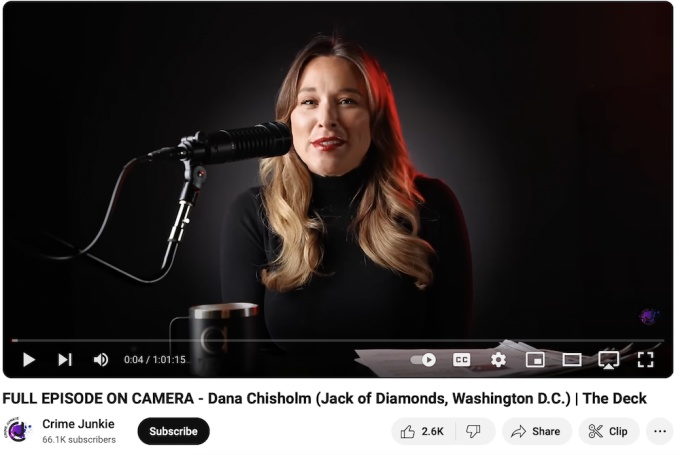
For the background itself, keep it dim relative to your face, with colored accents or a soft lamp tucked in to add warmth and character. Look at how Crime Junkie leans into low, dark lighting to set an eerie tone; your background lighting can do that kind of tonal work for you.
Also, stick to a single color temperature throughout. Mixing warm and cool sources makes your skin tone look off on camera and is one of those things viewers notice without knowing why. Accent lights are an exception to this rule, as long as they’re not cool or warm white.
Add Visual Depth
You don’t want your background to look flat. You’re probably using a good camera, so you want to take advantage of the depth of field it’s able to capture. Using distance and light to your advantage is the way to go.
Start by stepping away from the wall. Aim for at least ½ to 2 meters of space between everyone's backs and the background.
If your studio uses smartphones or cameras with wide kit lenses, they naturally have a deep depth of field that keeps everything sharp. You need that physical distance to force the optical separation.
Pair that distance with a rim light (or hair light) for each host. Place these lights high up behind the chairs, slightly off-axis, and angle them down toward the back of the head and shoulders.
This cuts a clean highlight around everyone's silhouettes, instantly separating the panels from the background without spilling ugly lens flare straight into your camera glass. Layering helps too.
Think of your frame in three planes: the foreground (the hosts and their mics), the mid-ground (a foreground plant or side-angled prop), and the background (the wall and bookshelves). When each plane has something going on, the shot has dimension.
A single shelf sitting directly flush behind someone's head at the same focal plane as their face completely flattens the image. If you're shooting on mirrorless cameras, opening up your aperture to a low f-stop (like f/2.8 or lower) will naturally blur those background layers.
But even on standard lens setups, those physical distances keep the frame looking professional.
Video Podcast Background Ideas and Layouts
While everyone’s studio should look different and brand-adjacent, a little inspiration goes a long way. Ultimately, your layout depends on your physical space and your format.
It gets a bit more complicated if you have an on-set co-host or guests. This usually requires a wider shot, which means more of your studio needs to be presentable. If you run a multi-camera setup where hosts face each other, remember that you are actually designing multiple backgrounds.
Every individual camera angle requires its own dedicated vignette, meaning opposite walls must be styled cohesively so the cut between shots feels natural. That might even change depending on days when you do a solo podcast and when you’re interviewing people.
Before choosing paint colors or decor, you need to map out how people and cameras will fit into the space. Examples include:
Solo Desk: The classic creator layout. You sit facing a desk with a single camera directly in front of you. The background is a single, flat wall or corner vignette behind your chair. It requires the least amount of space and styling.
Across-the-Table (Joe Rogan’s Layout): Host and guest sit directly across from each other at a wide industrial table or desk. You can use 3 cameras here: 2 tight profile cameras facing each speaker, and one wide master camera capturing both from the side. This means your "backgrounds" are actually the two opposite side walls of your room, which need to be styled symmetrically.
Lounge Two-Shot: Perfect for conversational or lifestyle shows. The host and guest sit in comfortable armchairs angled at 45° toward a central coffee table. A single wide camera captures them both in the same frame, meaning you need a wide background wall that covers the entire width of the seating area.
Panel Desk: Designed for shows with three or more regular hosts. Everyone sits on one side of a curved or long rectangular desk, facing the cameras. This creates a broadcast-news style where a single large background wall spans behind the entire group.
Based on what layout you go with one or more of the following aesthetic ideas.
Clean Minimalism
A matte, neutral-toned wall featuring one or two highly intentional elements, such as a custom neon sign or a single piece of high-quality art. By eliminating background clutter, you prevent the camera lens from capturing distracting details, keeping 100% of the viewer's focus directly on the speakers.
This restrained aesthetic works exceptionally well for tech, business, or high-focus interview shows where the content demands absolute concentration.
However, minimalism requires flawless execution; because the frame is so sparse, any minor imperfection like a poorly hidden cable or an off-center frame will immediately draw the eye and disrupt the composition.
Branded Studio
This approach integrates your specific corporate or personal brand guidelines, color palettes, and geometry directly into the physical environment.
An intelligent audience immediately spots a cheap, flat step-and-repeat banner, which instantly degrades a high-end podcast into a dry corporate webinar. True brand integration relies on physical assets built into the set's architecture.
Think of a custom-crafted, backlit glass neon logo anchored precisely within the camera frame, complemented by color-matched LED accent lighting and cohesive furniture styling.
This subtle execution ensures your brand identity remains permanently in the shot across all camera angles, reinforcing brand recall without ever feeling forced or distracting to the viewer.
Nature-Inspired
This environment brings a workspace to life by incorporating organic textures, warm wood elements, and large-leafed plants like Monsteras or Fiddle-Leaf Figs.
From a composition standpoint, placing tall flora in background corners breaks up harsh, parallel 90° room angles that often make small studios look boxy and clinical on camera.
Pairing this greenery with low-glare, warm-toned accent lamps softens the wide frame lines and creates a highly inviting, hospitable atmosphere.
The key here is maintenance and placement; synthetic plants look incredibly cheap under high-definition studio lights, so real greenery must be used and positioned where it won't physically obstruct the hosts or interfere with mic placement.
Industrial
This style leverages raw, rugged textures that interact beautifully with professional studio lighting. Utilizing exposed brick or concrete accent walls provides a non-reflective, highly detailed surface that adds instant character to wide camera shots.
When paired with dark metal piping, premium leather seating, and warm industrial Edison bulbs, it creates an environment well-suited for comedy, culture, or long-form conversational formats.
To execute this logically, you must manage acoustic reflections; hard surfaces like concrete and brick bounce sound waves easily.
Integrating subtle acoustic treatments, such as dense furniture, heavy rugs, or strategically placed bass traps, is essential to ensure the studio's audio quality matches its premium visual appeal.
Cozy and Lived-In
This theme prioritizes a warm, premium residential atmosphere over the sterile aesthetic of a traditional broadcast station. It establishes comfort through tactile, hospitality-driven elements like textured linen curtains, deep plush armchairs, and soft woven throw blankets draped over seating.
These physical textures absorb both harsh studio light and ambient sound, creating a space that feels deeply intimate on a wide camera lens.
To execute this logically without introducing visual clutter, focus on symmetry and organic shapes; heavy fabrics soften the rigid architectural lines of a standard room, transforming a clinical filming space into an inviting lounge that encourages natural, relaxed conversation from your on-set guests.
Virtual Backgrounds
If your physical space is completely limited, a green screen or an LED video wall can act as your studio canvas. However, a multi-person layout changes the technical requirements.
Multiple chairs mean you cannot use a cheap pop-up green screen; you will need a massive, flawlessly lit chroma-key cyclorama wall.
Also, your physical studio lights must match the exact color temperature and directional angle of your digital background plates, or the final composite will look cheap and disconnected.
Budget-Friendly Hacks
There’s no need to rent out a studio or start a home-improvement project yet. Focus your budget on getting the best video equipment for production first. Backdrops can come next. So when you are in need of a quick fix look out for these solutions:
Posters: Hang a large poster that fits your theme.
Fabric Fix: Use a clean, ironed sheet or curtain for a seamless look.
DIY Lighting: Clip-on desk lamps with daylight bulbs work in a pinch. Play with different angles to create an interesting background.
Thrift Finds: Scour secondhand stores for affordable, unique decor pieces.
FAQs
Whether you're just getting started or rethinking your current setup, these are the questions that come up most often. The short answers are below, but most of them are covered in more detail somewhere in the guide above.
What is a good background for a podcast?
A good podcast background is clean, intentional, and consistent with your brand. That could mean a minimalist wall with a single piece of art, a well-curated bookshelf, or a fully designed set with matching furniture and branded lighting.
The specifics depend on your niche and audience. A true crime show and a wellness podcast have very different visual needs. Start with what you have, remove anything distracting, and build from there.
What to use instead of backdrop?
Your existing environment is often enough. A tidy wall with some thoughtful decor, a well-dressed bookshelf, or a cozy corner of a room can all work without a dedicated backdrop.
If you need something more controlled, peel-and-stick wallpaper, a large fabric curtain, or a printed vinyl banner are affordable alternatives. A green screen is worth considering if you record in multiple locations or want the flexibility to change your background between episodes.
How do you choose the right background colors for different skin tones?
To ensure all hosts and guests look natural on camera, your primary background colors should offer high contrast without matching or washing out human skin tones.
Avoid background walls that mimic flesh undertones, such as flat beige, tan, or oversaturated peach, as well as stark, clinical whites that cause cameras to underexpose faces.
Instead, opt for deep, desaturated colors like charcoal, navy blue, forest green, or deep plum. These tones allow any skin color to pop forward in the frame, creating a clean optical separation that makes your subjects the focal point of the shot.
How do you stop a highly styled studio set from ruining your audio quality?
The biggest pitfall of visual set design is introducing hard, reflective surfaces, like glass tables, exposed brick, or bare drywall, that cause terrible echo and room bounce. To protect your audio while maintaining your aesthetic, you must integrate acoustic treatment directly into your decor.
Swap out glass or metal tables for solid wood, place thick rugs under the chairs, and hang heavy, textured linen drapes over bare walls. You can also use premium wooden acoustic slat panels as your backdrop, which combine high-end architectural styling with professional sound absorption.
Ready to Roll?
A killer background for your podcast video doesn’t have to be expensive or complicated. It just needs to set the tone, reflect your brand, and make your listeners (or viewers) feel like they’re hearing from a real human.
Work with what you’ve got. Then take a step back, and look at your setup. Does it reflect who you want to be on screen? If not, make tweaks where you can. Your audience deserves the best, and so do you.
If you need any help taking your podcast from audio to video, the Lower Street team would love to make it happen. Reach out and tell us about your show!