Podcast Marketing in 2026 - Why AI Makes Audience Trust the Only Marketing Asset That Matters
Contents

Author
Jackie Lamport
Head of Growth Marketing
Hey, I'm Jackie! I play a lot of soccer but have to call it football because I live in Europe. I also play guitar but they don't have another word for that one.
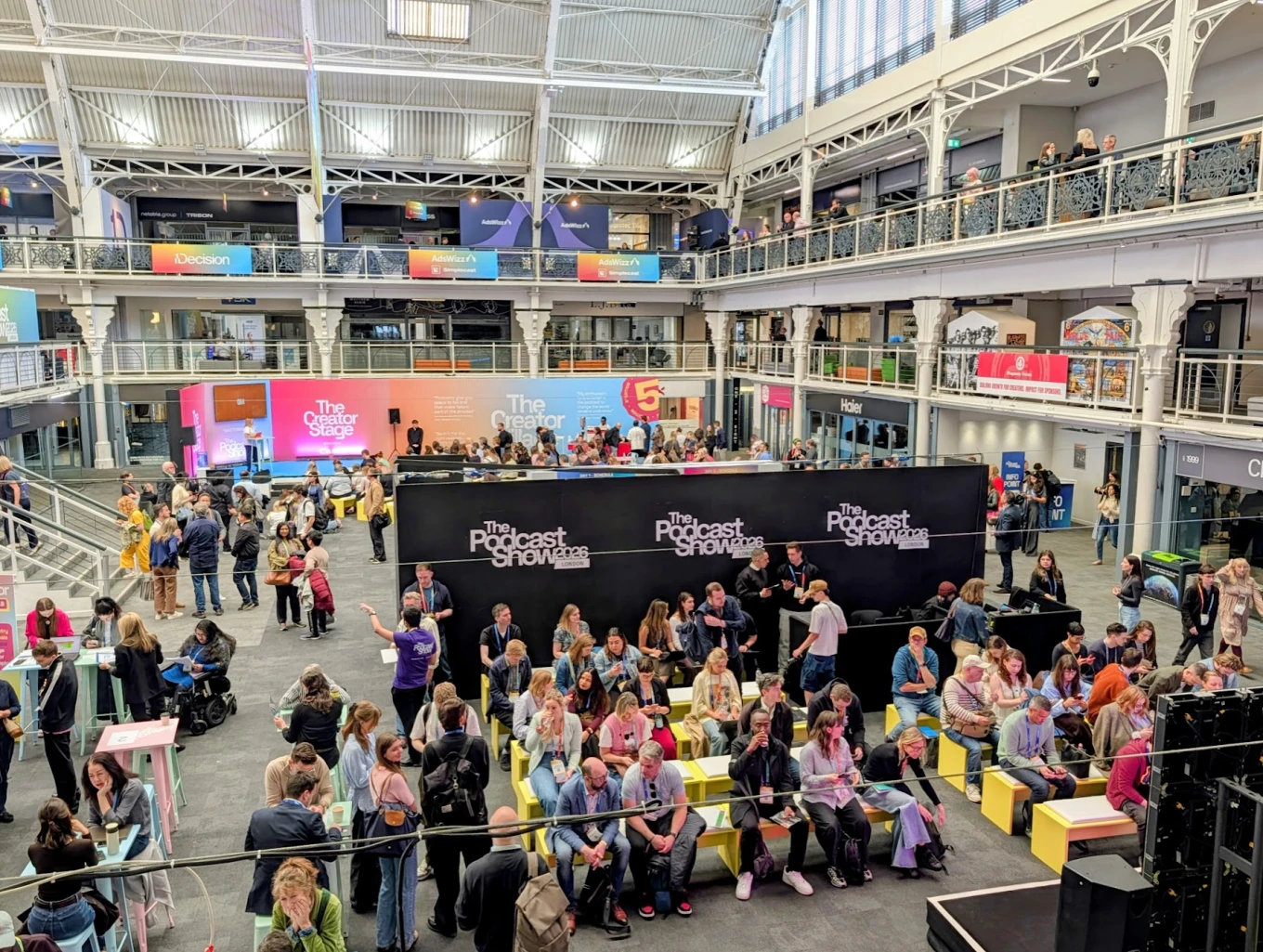
I was nearly fresh off the plane and going off of three hours of sleep when I arrived at a little Mexican restaurant around the corner from The Podcast Show 2026 in London. Harry, my boss and the founder of Lower Street, had invited me to dinner with himself, Dan Misener and Jonas Woost of Bumper Media.
Dan and Jonas were pitching me on their new Bumper Number, which they would debut at the show the next day. In that pitch, Jonas said something that struck me in the moment, and in hindsight, represents the near-universal idea being expressed at the conference this year.
He said something along the lines of: We know brands like BetterHelp are willing to buy ads on podcasts; what we want is for the Swiffers of the world to want to advertise on podcasts as well.
(Sorry, I can't give you the exact quote, my AI note taker was not present at this IRL dinner, though I could have arranged it, I guess.)
Their solution to this problem, the Bumper Number, is essentially a standardised power rating that advertisers can ask shows to provide.
There is a lot of fascinating conversation to be had around this solution specifically (our dinner that night was nearly exclusively that) but their solution is, really, a bold response to the overall, unifying goal of the industry.
Podcasting is demanding it be taken seriously. The industry is looking for major brands to include podcasts in every campaign-- like they would with TV, print, radio, and social media, rather than viewing it as an experimental test.
Among industry leaders, there are different visions for what this actually looks like in practice. Some want brands to buy ad spots on existing, some want partnerships and investments with existing shows and influencers. Representing Lower Street, a branded podcast agency, I want brands to build their own owned media channels. But we were all orbiting the same idea– the industry is ready to be part of the adult table.
I heard a version of this from almost everyone I spoke to at the show. David Prever said it the most directly. He's the Head of Podcasts, SASSY+ and has been in podcasting since 2006. He said, "It's no longer a pretender medium, which it sort of has been for a number of years. But it's there with the Netflix deals, with the big Amazon Prime deals."
I understand that by my framing it this way, that the industry wants to be taken seriously, finally, it may imply that we weren't serious before. That isn't true. The respect for the power of podcasting's ability to impact the audience so directly has been noticed. See politicians campaigning on podcasts.
Even before that, the medium has already earned its cultural reputation. Podcasts like The Daily and Fresh Air proved long ago the immense opportunities in creating emotional, intimate, powerful stories. So this isn't about proving the value of the medium itself. This is about proving the economy around it, and showing, to put it bluntly, that the money works.
I don't fully agree that it isn’t already clear to an extent that the monetary ROI is there. Lower Street is a branded podcast agency, so we directly see the brands that trust the value, and see the rewards, because we work first hand with them. But I do agree that there is more opportunity and more to prove.
The Divide
It has already been clear that the podcast industry is worth investing in. Here's a recent example. In April 2026, OpenAI paid what's been reported as somewhere in the low hundreds of millions for TBPN, a daily tech talk show run by 11 people.1
But there is a divide in the podcasting world.
"There's big money to be made here," is an obvious statement. Shows like Call Her Daddy and The Joe Rogan Experience or the whole true crime genre have famously built very profitable operations around the medium. Yes, they all have a video element in common, but more importantly, these reflect the online world, the "influencer" world, not the professional broadcast world of radio, television, and print. Mediums that have been respected for generations. It's like the joke about being a TV star versus a movie star. Podcasting, while now over two decades old, is still part of the internet, and as such is trying to shake that pre-adolescent image.
The other, and much larger side, of the podcast industry is the one where the non-influencers live. The mainstream, if you will. The news shows, the general entertainment, or my personal favourite: the indie fiction shows. The agencies like us and JAR Audio, the tool developers like Riverside. The independently owned local podcast studios opening all around the world. This is the part of the industry that is growing and demanding full recognition.
It is not that the industry isn't yet respected, it is that it is not yet respected and valued enough given its potential. The insiders of the podcast world know this. We just haven't had enough time yet for the message to permeate to the outside world. Even in the ad-spot buying game, so many brands only take notice of a small fraction of the podcasts out there. The gap between the top 1% of podcasts and the other 99% keeps growing. There is an unbelievable amount of niche opportunities unique to the culture of the medium, yet they are largely ignored.
Owned Audience Marketing
The Good News
The moment is ripe and there is a ton of opportunity for the future of content and audience focused marketing within podcasting as we enter the new frontier of the internet.
The Bad News
Marketers could be misled and miss the opportunities that are unique, fresh, and ripe for the cultural moment if the podcast industry tries to replicate media standards of the old world, rather than embracing what has made the medium so powerful.
It's odd to me that an industry built on an experience that is still in its adolescent exploration phase should want to look to tradition as a north star.
Podcasting's power has never been centred around reach. Its power is its unique ability to create such strong connections with audiences. It's a medium built around the idea that you, the listener, are being spoken to directly. It offers the closest experience you can get between the audience and the show.
The winners in the industry right now, the ones driving it into the mainstream, aren't the people who have waited for the industry to become something that already exists, they're the people making it something better.
The brands that bet on using podcasts to build audience trust and community are the ones that are going to win. Building that connection with your audience is the way brands are going to thrive in the future.
There is one shining example already in action. It’s an entertainment company first, but shows the immense potential in owned audience marketing for all brands.
Dropout TV is a company built strategically around audience connection and trust. It’s a fascinating story, given they were left essentially for dead after their parent company laid off 105 of their 112 employees in January 2020 and sold the company to their chief creative officer Sam Reich to rebuild from scratch.2 The company is now somewhere between seven and ten times the size it was when IAC dropped them, profitable, and making waves in the mainstream media production world.3
The company managed to do that by building an incredibly passionate community online, and their marketing efforts were through making content that connected with that community. I won’t go too far into it, but if you’re interested, watch this interview.
My personal experience with this kind of community-first approach is pretty on the nose. The Lower Street team built and produced Moneywise, a podcast created for Hampton, a community of founders. We were building connection with the audience because the goal was quite literally to get them to join the community. Well. It worked. We built a dedicated audience that was engaged, kept coming back, and the content strategy evolved into Hampton’s main marketing strategy.
Christy Gressman helped build Night Vale Presents, a fiction podcast pioneer, and is now VP & Executive Producer of Podcasts at Topic Studios (First Look Media).4 Night Vale Presents is a company that grew by developing a deep connection with their audience. That approach is one that Christy still takes with her. This is what she told me when I asked her about the future of the industry at the Podcast Show, "I think it's way less about numbers and more about engagement and people who really love things."
It Is Time.
With AI, and the rapidly changing way we interact with the internet as an interface, the future of marketing is putting more and more value on human-to-human community building. The emphasis on traditional reach numbers in content marketing is dying, because the real value isn't a number.
It's funny, attribution has never been more technically possible, which may conversely be why we often feel so blind. There are so many stats available that we feel like we’ve never quite seen enough to get the full picture, even though we've always known that the most important thing is building connection, because that's what makes people choose you. And that is a feeling. We can use data to understand what feelings work for us, but in the end it is always that. A feeling.
This doesn't mean analytics don't matter. I just think the things we collect and the way we read them should continue to adapt. What do we actually want to measure? The depth of the relationships we're building, and the impact those relationships are having on our goals. That means prioritising the audience over the reach. All of those reach stats still matter, it's just about how you read them, and what you do about them, because they are supposed to be signals rather than a result. This is the mindset I built the YouTube analytics measurement framework ARC around.
The important focal point here is the value in connection. AI is making this urgent. When content can be generated infinitely and cheaply, the thing that can't be faked is the human relationship and the trust it builds over time. There's a 2024 B2B study from Edelman and LinkedIn that found 73% of decision-makers trusted thought leadership over marketing materials.5 This is why podcasting shines. The value of an audience isn't the size of the reach, it's the trust they have in you. That's how you grow a real audience of real people that make real impact.
The moment is calling for marketing strategies that build strong, human, audience connection, and the timing is perfect for the podcast industry to step in as a solution. It's already happening.
Works Cited
1 Financial Times. "OpenAI Acquires TBPN." April 2, 2026. Reported via Podnews: https://podnews.net/update/openai-tbpn (Price unconfirmed by OpenAI; "low hundreds of millions" is the most reliably sourced figure.)
2 Variety. "IAC Selling CollegeHumor to Chief Creative Officer Sam Reich, Staff Laid Off." January 8, 2020. https://variety.com/2020/tv/news/collegehumor-sold-layoffs-1203461014 (Confirms layoff of 105 of 112 employees, sale to Reich for no cash.)
3 Variety. "Dropout Doubles Subscribers, Sam Reich on New Shows and Growth." December 2023. https://variety.com/2023/streaming/news/dropout-subscribers-double-new-shows-sam-reich-1235829675 (Source for "somewhere between seven and 10 times the size" — Sam Reich's own words.)
4 Variety. "Topic Studios Hires Christy Gressman to Head Podcast Team." 2020. https://variety.com/2020/digital/news/topic-studios-hires-christy-gressman-to-head-podcast-development-and-production-1234642559 (Confirms Gressman's title and role at Topic Studios / First Look Media.)
5 Edelman and LinkedIn. "Reaching Beyond the Ready: 2024 B2B Thought Leadership Impact Report." Edelman, February 2024. https://www.edelman.com/expertise/Business-Marketing/2024-b2b-thought-leadership-report


